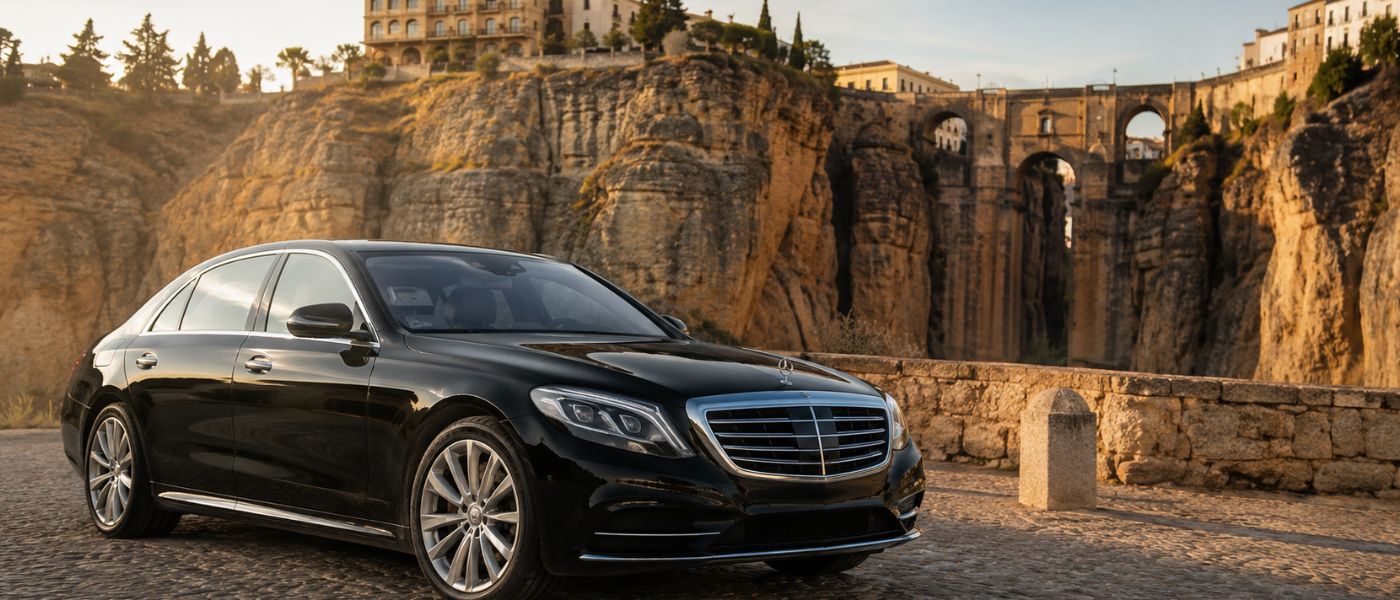
The best day trips from Marbella are one of the main reasons the city works so well as a base for exploring southern Spain. From here, you are roughly an hour from a major city, an hour from the mountains, an hour from a British territory and around two hours from two of Europe’s most remarkable monuments.
That said, not every destination works equally well as a day trip. Some make for an easy half-day outing, others require ten hours or more, and a couple are genuinely better enjoyed with an overnight stay. Below is an honest assessment of each option, based on how the routes work in practice rather than how close they may appear on a map.
Day trips from Marbella at a glance
| Destination | Approx. drive time (one way) | Best for | Recommended time there | Planning notes | Day-trip suitability |
|---|---|---|---|---|---|
| Mijas Pueblo | 30–40 min | Half-day, easy first outing | 2–3 hrs | Steep streets; mornings calmer | Excellent |
| Casares | 40–50 min | Views, quiet villages | 2 hrs | Few facilities; combine with Estepona | Excellent (half day) |
| Málaga | 50–60 min | Museums, food, city walking | 5–6 hrs | Book Picasso Museum and Alcazaba | Excellent |
| Ronda | 1h–1h15 | Scenery, history, wine | 4–5 hrs | Winding road; arrive early or late | Excellent |
| Gibraltar | 45 min–1h | The Rock, something different | 4–5 hrs | Border rules changed in July 2026 | Very good, with caveats |
| Nerja & Frigiliana | 1h20–1h40 | Coast, caves, white villages | 5–6 hrs | Combine both; caves cool year-round | Very good |
| Granada | 2h–2h30 | The Alhambra | 6–7 hrs | Timed entry; book months ahead | Good, with an early start |
| Cádiz | 2h–2h30 | Atlantic coast, seafood | 5 hrs | Long, but flat and walkable | Fair to good |
| Córdoba | 2h30–3h | The Mezquita | 5 hrs | Very hot in summer; long return | Demanding |
| Seville | 2h30–2h45 | Alcázar, cathedral, Triana | 6+ hrs | Too much for most in one day | Better as an overnight |
Ronda: the strongest single day trip
If you only do one excursion from Marbella, make it Ronda.
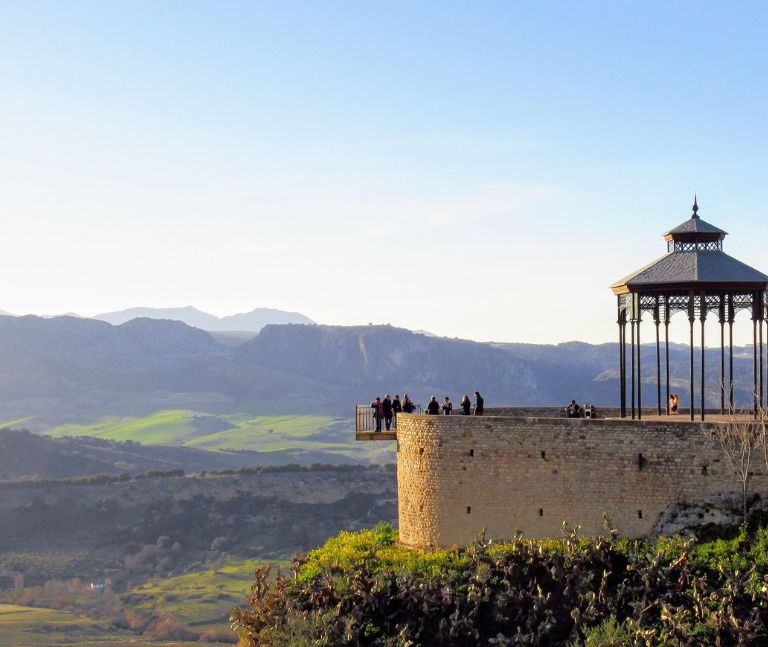
The town sits on a cliff split by the Tajo gorge, spanned by the eighteenth-century Puente Nuevo. It is also home to one of Spain’s oldest bullrings, the Arab baths and an old town that rewards aimless walking.
The drive is part of the appeal. The A-397 climbs through the Serranía de Ronda in around an hour. It is well maintained but genuinely winding, which is worth knowing if anyone is prone to motion sickness. It is also one reason many visitors prefer not to drive the route themselves.
Practical advice: go early or late. Coach tours dominate the town centre between roughly 11 a.m. and 3 p.m. Allow around four to five hours to explore Ronda comfortably.

Málaga: underrated and easy
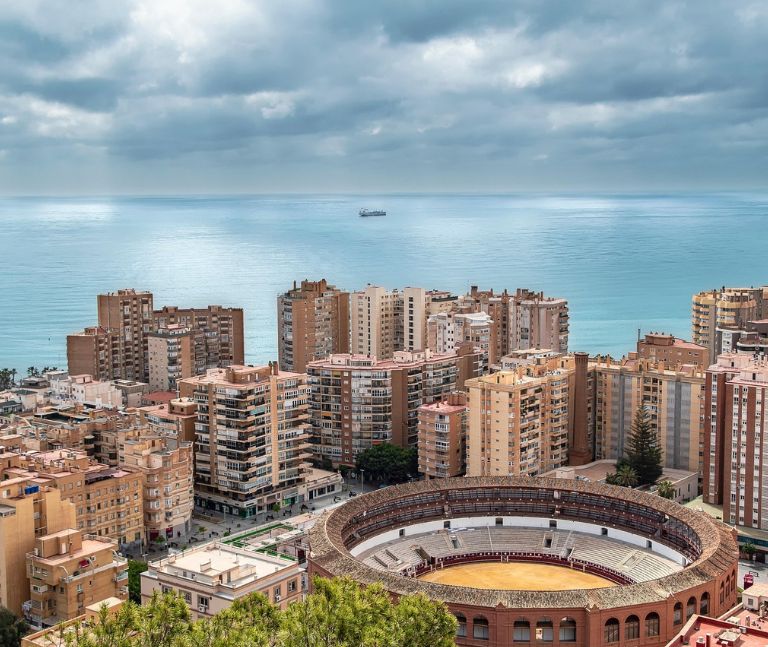
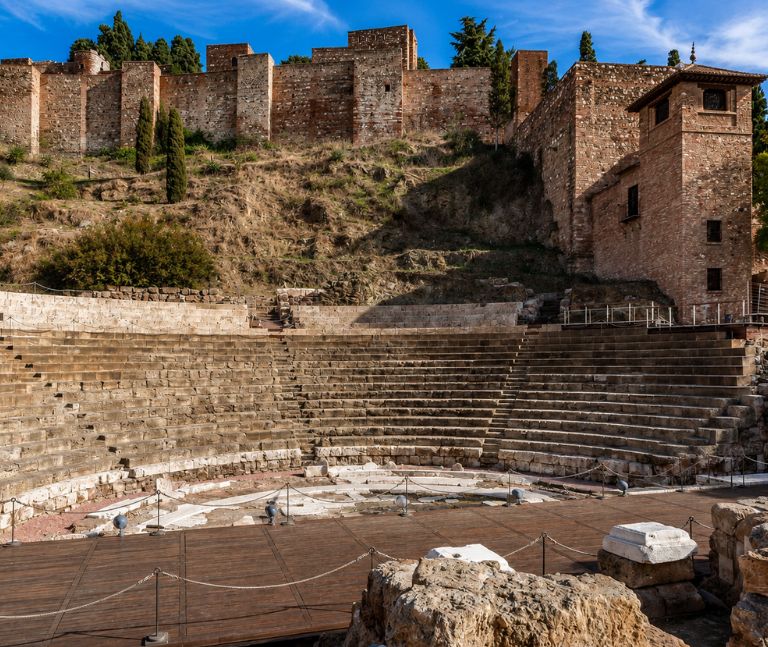
Málaga has quietly become one of Spain’s better city breaks. Its main attractions include the Picasso Museum, the Roman theatre, the Alcazaba fortress, the Centre Pompidou and a restored old town with a serious food scene.
At under an hour from Marbella, it is the easiest full-day excursion on this list. Leave at around 10 a.m., have lunch in the historic centre, walk along the Muelle Uno waterfront and return to Marbella in time for dinner.
Practical advice: the historic centre is largely pedestrianised and has restricted vehicle access, so drop-off points are located around its edges. This is a minor issue when travelling with a driver, but a more significant inconvenience when using a rental car and searching for a parking garage.
Granada and the Alhambra: worth it, with an early start
Granada is the most rewarding day trip on this list and the most demanding to organise. The drive takes around two to two and a half hours each way, while the Alhambra requires approximately three to four hours to visit properly.
The day has to be built around one fixed point: the Nasrid Palaces entry time printed on your ticket. If you miss the allocated window, you lose access to that section. Tickets are sold through the official Patronato website and regularly sell out weeks or even months in advance.
Practical advice: aim for a midday palace slot and leave Marbella between approximately 7:30 and 8:30 a.m. This allows you to visit the Generalife and Alcazaba first, enter the palaces at the fixed time and have a late lunch afterwards.
It is a full day of around ten to twelve hours. A private transfer between Marbella and Granada removes the two least enjoyable parts of the excursion: driving before and after a long visit, and finding parking near the monument.


Gibraltar: different, and currently in transition
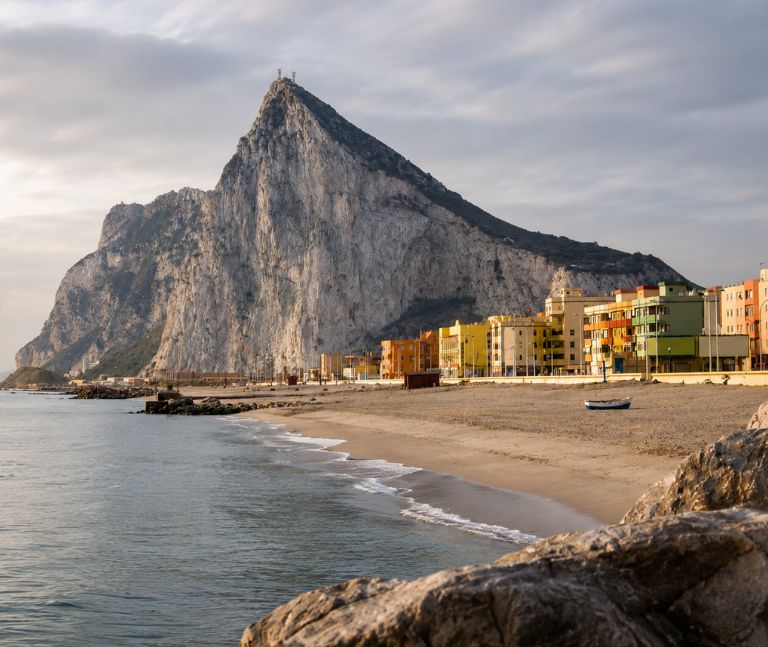
Gibraltar is a British Overseas Territory at the southern tip of the peninsula, approximately 45 minutes to one hour from Marbella.
The main attraction is the Rock itself, where visitors can experience the cable car, St Michael’s Cave, the Great Siege Tunnels and the Barbary macaques. Main Street also offers the unusual atmosphere of a British high street on the Mediterranean.
On border arrangements: under the UK–EU treaty on the movement of persons, which entered into application in July 2026, routine checks at the land border with Spain have been removed and controls relocated to Gibraltar’s port and airport.
These arrangements are recent and the details are still settling. Carry your passport regardless and confirm the current entry conditions before travelling, as rules in transition should be verified rather than assumed.
Practical advice: the frontier queue was historically the biggest variable on this excursion, which is why many visitors chose to cross on foot. Allow some flexibility for the return journey.
A transfer between Málaga and Gibraltar, or a private transfer from Marbella, can be arranged according to how you plan to cross the border. Allow around four to five hours on the Rock to cover the cable car, the caves and lunch.

Mijas and Casares: the best short outings
Not every day needs to be a full excursion.
Mijas Pueblo sits in the hills above Fuengirola, 30 to 40 minutes away — whitewashed, walkable, with a long view down to the coast. Two or three hours is plenty, and mornings are calmer.
Casares is smaller and more dramatic: a village stacked up a hillside beneath a ruined Moorish castle, 45 minutes west. There is less to do, which is rather the point, and it pairs well with Estepona’s old town on the way back.
Both work as half-days — ideal for a first day, a hot afternoon, or a group that wants to be back by mid-afternoon.


Nerja and Frigiliana: coast and mountains in one day
East of Málaga the coastline changes character — steeper, greener, with the Sierra Almijara rising behind the sea.
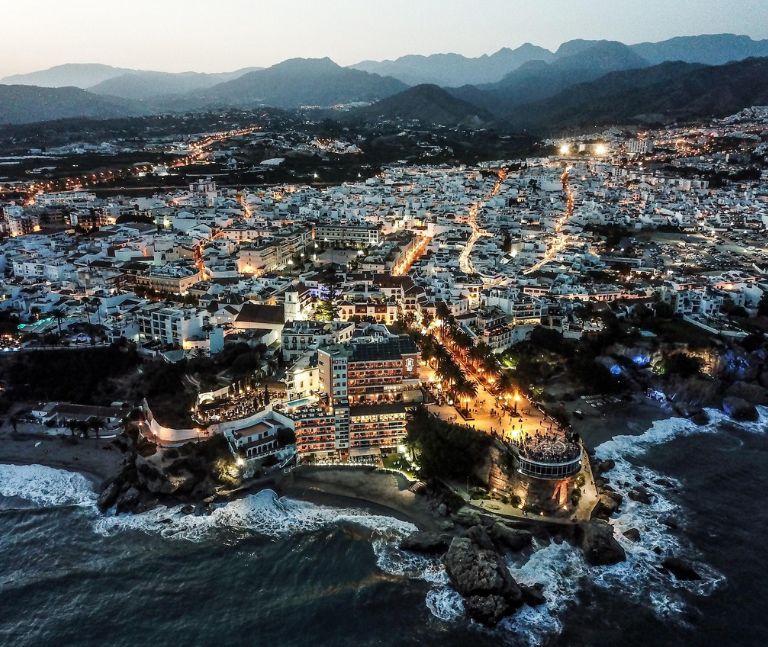
Nerja is known for the Balcón de Europa viewpoint and the Cuevas de Nerja, a large cave system of prehistoric significance. Frigiliana, 15 minutes uphill, is among the most attractive white villages in Andalusia. The drive is 1h20 to 1h40, so this is a full day, but the two complement each other well. Budget five to six hours on the ground.
Practical advice: Frigiliana is steep. If mobility is a consideration, the upper drop-off point makes a large difference.

Cádiz, Córdoba and Seville: be honest about the distance
All three are frequently listed as day trips from Marbella. All are possible. Not all are advisable.
Cádiz (2h–2h30) is the most manageable. The old city is compact, flat and surrounded by water on three sides, so five hours is genuinely enough: the cathedral, the market, the Atlantic beaches and lunch. A long day, but not a punishing one.
Córdoba (2h30–3h) is a five to six hour round trip for a city whose highlight, the Mezquita, takes about 90 minutes. It works if that is the specific goal, though in midsummer heat it is a hard day — and it sits far better as a stop on the road between Granada and Seville.
Seville (2h30–2h45) is where we would push back. The Alcázar and cathedral alone justify a full day and both need advance booking. A day trip means five and a half hours in the car for roughly six on the ground, arriving mid-morning and leaving before the city’s best hours. Seville deserves at least one night.


How to choose the right day trip
Four questions settle it quickly:
- How much driving are you willing to do? Under 90 minutes each way keeps the day relaxed; over two hours makes it an expedition.
- Is there a fixed appointment? The Alhambra and Seville’s Alcázar require timed tickets. Everything else can flex.
- What is the weather? In July and August, inland destinations are much hotter than the coast. Nerja, Cádiz and Málaga are more comfortable.
- How many days do you have? With one free day, choose Ronda or Málaga. With three, add Granada. With a week, add Nerja and Gibraltar.
Why a private driver suits day trips from Marbella
The alternatives each have a specific weakness in this situation.
A coach tour fixes your departure time, lunch stop and return journey, and often includes several hours that you did not choose. A rental car means driving the winding mountain road to Ronda, finding parking near Málaga’s restricted historic centre and navigating the unfamiliar approach to the Alhambra. A taxi is metered and generally designed for individual journeys, not to wait for five hours while you explore a destination.
A private chauffeur is booked specifically for your day, with a defined vehicle and a driver who is available when you finish rather than when a fixed schedule dictates.
- Door-to-door pickup from hotels, villas and urbanisations, including hillside addresses that can be difficult to describe to a taxi driver.
- Drop-off as close as vehicle access allows, with pickup wherever you finish your visit — often in a different place from where you started.
- A flexible schedule that can adapt if lunch runs long, plans change or you decide to return earlier.
- The right vehicle for your group: a Mercedes E-Class or S-Class for a couple, or a V-Class for families and groups of five or more.
- Optional stops along the route that a fixed coach tour cannot usually provide.
One clarification: a chauffeur handles the driving, timing and logistics and knows the region well, but is not a licensed tour guide. Commentary inside monuments such as the Alhambra or the Mezquita requires a separate booking with an official guide, which a full-day chauffeur service in Marbella can easily accommodate.
Practical tips for any day trip
- Start earlier than feels necessary. Every destination here is better before 11 a.m.
- Book timed entries first, then build the rest of the day around them.
- Carry passports for Gibraltar and photo ID for the Alhambra, where tickets are issued in the visitor’s name and checked at the entrance.
- Dress for walking. Andalusian old towns are often cobbled, steep and unforgiving when wearing shoes with smooth soles.
Frequently asked questions
Ronda, for most travelers — an hour away, dramatic, and comfortable in half a day if needed. If the Alhambra is on your list, Granada is the more significant experience but a much longer day.
Possible, but rarely satisfying. Five and a half hours of driving for six hours in a city that deserves two days is a poor trade.
Four to five hours on the Rock. Allow flexibility on the return, since border arrangements have recently changed.
Málaga, Mijas or the Nerja caves — manageable walking, shade and plenty to look at. Granada and Córdoba involve a lot of standing.
The Alhambra, always and far ahead. Seville’s Alcázar, yes. The Picasso Museum and Nerja caves, advisable in high season. Everything else can be decided the day before.
Planning your excursion
The best day trip from Marbella is the one that matches how you want to spend the day, not necessarily the destination with the most famous name. An hour’s drive to Ronda, with enough time to explore at a relaxed pace, will often be more enjoyable than spending five hours in a car simply to tick another cathedral off your list.
Tell us where you would like to go, how many travellers are in your group, your pickup address and approximately what time you would like to return. We will arrange a private vehicle and professional driver for the day.
Request a quote, and we will build the itinerary and timings around your plans.